Date & Time
Sun, Sep 27, 6:30 PM
Price
$32–$66
Tickets
About
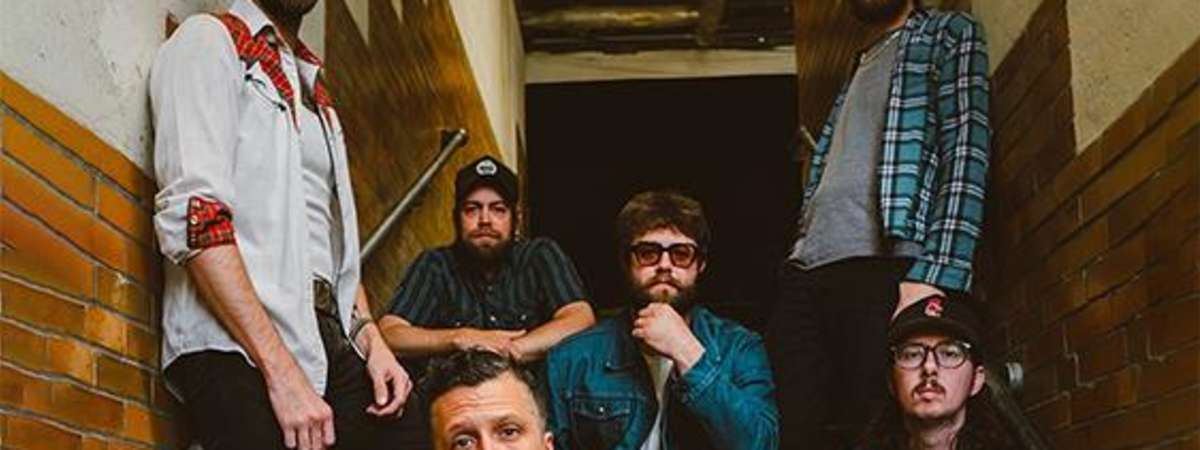
American Aquarium 20 years. 20 records. Over 4,000 shows. And somehow, American Aquarium are still finding new ways to surprise us. On New Ways to Lose, frontman BJ Barham and his band of road warriors turn two decades of survival into a driving, deeply-felt rock & roll statement — one built on resilience, reinvention, and the hard-earned clarity that only comes with time. "We've always been outsiders," says Barham, whose songwriting has steered the group through lineup changes, heartache, addiction, recovery, a global pandemic, and every other obstacle imaginable. Long before algorithms and viral breakthroughs spelled out success in the music industry, American Aquarium earned their place the old-school way: through relentless touring and a stubborn refusal to disappear, even when the odds suggested they should. New Ways to Lose turns that outsider status into armor. Produced once again by multi-time Grammy winner Shooter Jennings, the album was recorded in Los Angeles over a 10-day session that captured the band at their most immediate and alive. Much of the record was tracked live, with Jennings encouraging spontaneity and instinct over perfection, while a round of overdubs offered the opportunity to add three-part harmonies and horn arrangements to the songs. The result is a muscular, cinematic record that embraces both sides of American Aquarium's identity: the bruised confessionals of a songwriter who's already spent decades sharpening his craft, and the full-throttle release of an anthemic, amplified rock & roll band. Hot-wired with the same electricity as their live show, New Ways to Lose nods to heartland heroes like Bruce Springsteen, Tom Petty, and Neil Young while remaining unmistakably American Aquarium. For Barham — who formed the band in 2006 in Raleigh, North Carolina — the album isn't just a snapshot on a band at its peak. It's a personal turning point, too. "All of my records are yearbooks," he says. "Twenty years from now, I'll pull them off the shelf and remember exactly who I was when I wrote them." If earlier albums offered glimpses of a man in his 20s, making his way through a haze of uncertainty, heartache, and bad behavior, then New Ways to Lose finds Barham writing from a place of hard-won maturity. He's not just a songwriter anymore; he's a husband, father, and bandleader who's fully comfortable confronting the dark corners of the human experience. Across these ten songs, he tackles themes like the downfall of small-town America, the yearning for true connection, the socioeconomic wreckage of unconstitutional politics, and even the devastation of losing a beloved pet, making room for tenderness and gratitude amidst the sonic stomp of his band. "Twin Flames," written for his wife, stands as one of the most vulnerable love songs of his whole career, a reflection of a full-grown man no longer afraid to say exactly what he means. The album's title comes from legendary NC State Wolfpack announcer Gary Hahn, whose on-air quips — "and NC State finds a new way to lose today" — became metaphors for both sports fandom and the music business. "No matter what success you find, you're always looking up the ladder at what you don't have," says Barham, who's hand-carved a fiercely independent career outside the traditional machinery of the industry. Along the way, American Aquarium have earned an international audience, headlined bucket-list venues like the Ryman Auditorium and Red Rocks, and even launched their own festival, Road to Raleigh, all without a major label, mainstream radio support, or the kind of buzz-worthy hype reserved for music industry darlings. "It's about trying so hard to win at something," he adds, "but always finding a way to lose at it." But in true American Aquarium fashion, the phrase is delivered with a grin and a shrug rather than defeat. After all, this is a band that built their own table when nobody offered them a seat. That spirit runs through every corner of New Ways to Lose. Released independently through Barham's own Losing Side Records, the album doubles down on the freedom that American Aquarium have spent two decades fighting for. They own their publishing. They answer to nobody. And while the industry continues chasing trends, American Aquarium are still doing things their own way — including dropping the album just one week after announcing it. "We take our hits and we get back up," Barham says, "and we do what we do. There are three things you can count on: death, taxes, and American Aquarium showing up to your town once a year to play a rock & roll show." When it comes to New Ways to Lose, the band's rock & roll show looms large. Musically, the record distills the energy of those concerts into one of the band's most hifi, ear-candy-coated studio recordings yet. Towering choruses, piano-driven arrangements, hook-heavy riffs, E Street Band-worthy brass, and screaming guitars give songs like "Out There in the Dark," "Whatever Helps You Sleep at Night," and "Bad Habits" an expansive rock & roll scope. "Our live show is 90 minutes of us kicking your throat in," Barham adds. "We wanted to make a record that felt representative of that." Still, beneath the heartland hooks and sweaty stomp lies the same emotional honesty that has always defined American Aquarium. Barham may no longer be the young road warrior chronicling breakups and burnout from the front seat of a van, but he remains obsessed with documenting what life costs us — and what keeps us moving forward. New Ways to Lose is a record about loss, survival, maturity, and the strange beauty of getting back up after life knocks the wind out of you. Twenty years in, American Aquarium aren’t chasing validation anymore. They've built something bigger: a career on their own terms, a loyal community, and a catalog that continues to evolve without compromise. New Ways to Lose doesn't sound like a band slowing down. It sounds like winning — like musicians who know exactly who they are.
About the venue
Performing
Raleigh, NC – In the business of music, many are called and many may try, but few cross the threshold of being able to say they are truly committed for the long haul. With the upcoming release of their latest studio album, Burn.Flicker.Die. American Aquarium is proving that they have graduated to that class of professional musicians that have made an undeniable commitment to their music and their fans. American Aquarium’s six years as a band have been a fast-moving blur of rubber on road, touring coast to coast through the states and Europe. Most nights of the year are spent far from their Raleigh homes, squinting out from bright stages at a growing legion of passionate fans who’ve followed them through the release of six albums that reflect a whirlwind of too many whiskey soaked nights, nameless women in smoky bars and fast living while your youth is in full bloom. But what happens when it all stops feeling good? Burn.Flicker.Die. is what has emerged from that scenario for this group of hard working players. After two years of writing, they journeyed to the legendary recording hub which gave birth to some of the greatest blues, country and rock records of all time: Muscle Shoals/Sheffield, AL. Recorded in eight days under the precise hand of friend/tour buddy Jason Isbell, the record is an aptly named milestone for the band, and their most painstaking effort to date. As a long-time Southern rock artisan, Isbell provided a weathered know-how in producing the record American Aquarium is proudest of. Described as a “consequence record” by vocalist BJ Barham, the band spent that week pushing out everything that’s been haunting them: working for six years, watching buzz bands peak and die, and pining for their own payoff. “I wish my addictions didn’t mean so much/but we all can’t be born with that kind of luck,” Barham sings on the title track, capturing the fast lifestyle with images of subtle barroom horrors: Finding a high in a dingy bathroom stall, a pretty barfly from somewhere down south you won’t see again, free shots you can’t say no to. “Casualties” is a soaring, chorus-less ode to death by rock that confronts age and the band’s great fear of having made the wrong choice. They’ve watched artists ride the hype train right off the track. But that can’t be American Aquarium – they’ve been laying low too long, finding their way to the most poignant album of their careers through hard touring and waking up to realize that it’s not Saturday night anymore. Some of the record hurts to hear, like the quiet, fine-spun “Harmless Sparks.” It sounds like the flicker of a solitary cigarette burning to its filter in the blue-black glow of a bar. Keys plink like shot glasses in the background, and you’re the last to go home. American Aquarium has been there before. But the record also looks to the end of a hard road, where there might be validation for good music, and even love. In “Jacksonville,” Barham promises someone a call if he “makes it out alive.” Taking a cue from Ryan Adams, he draws romance out of shame in “Northern Lights.” And in “Saturday Nights” and “Saint Mary’s,” he makes a subtle mockery of the dives they know too well – slick with spilled whiskey and crawling with restless women who all look the same. Every grizzled image of Burn.Flicker.Die is real, which comes from the band’s profound understanding of small southern town debauchery and six years of pushing their careers off the bottom rung. Like many of their musical heroes that have paved the way before them, American Aquarium can wrap the ugliest feelings in the most spirited soundscape. Sonically uplifting instrumentation and vivid, wrenching lyrics illuminate the dark side of hanging out in rock ‘n’ roll limbo, but also how the band has clawed their way out of it. Through their struggle to sustain their career and resist the temptation of fire, American Aquarium’s demons have hung around. But so have they.
For all the moonlighting he's done in other genres over the years, Carl Nichols always comes back to the blues. At various points in his career Nichols has played gospel (despite being an atheist), West African music (despite being born and raised in Milwaukee) and, as one half of the acclaimed folk duo Nickel & Rose, Americana (despite having some deep reservations about that genre's long history of appropriating black music without always welcoming black musicians). None of those gigs, however, extinguished his desire to play the kind of traditional, acoustic blues he grew up admiring. Maybe on some level he's pathologically drawn to spaces where he's an outsider. As atwentysomething black musician, Nichols is all too aware that the modern blues scene doesn'tlook much like him, but he never outgrew his childhood love of the music. "It seemed cool to me when I was young," he says. "You'd just hear people like Lightnin’ Hopkins or R.L. Burnside, and they just seemed cool. That's why anybody gets into music, because it speaks to them." And it continues to speak to him, so much so that he’s tabled Nickel & Rose just as the duo was establishing itself as a major folk festival draw to pursue his dream of returning the blues to its songwriter roots. "I think a lot of what's been lost in the blues since the early '60s is the black experience, so I try to sing about that," Nichols says. "I can't escape racial realities, but I'm also aware that my audience is different than me, so the way they receive my message is different. I have this nostalgia for an era where blues musicians sang about their experiences to their own people, but that audience isn't there now." It’s a challenge, he admits, but there's power in crossing racial and generational divides. And on a personal level, he sees Buffalo Nichols as a form of justice for the music he's always loved. "I want to redeem the blues after all the experiences I went through when I was younger," he explains. "When I first started getting into the blues, my mom would take me to blues shows, and inevitably there'd be some old white guy there who would try to take me under his wing and explain 'the rules' of the blues to me. It chased me away." I always related to the blues," Nichols concludes. "I grew up in abject poverty. I experienced racism. And when I would sit down with a blues record, I could hear that in the songs. Now I want to be that person that I never got to see on stage."
About
American Aquarium 20 years. 20 records. Over 4,000 shows. And somehow, American Aquarium are still finding new ways to surprise us. On New Ways to Lose, frontman BJ Barham and his band of road warriors turn two decades of survival into a driving, deeply-felt rock & roll statement — one built on resilience, reinvention, and the hard-earned clarity that only comes with time. "We've always been outsiders," says Barham, whose songwriting has steered the group through lineup changes, heartache, addiction, recovery, a global pandemic, and every other obstacle imaginable. Long before algorithms and viral breakthroughs spelled out success in the music industry, American Aquarium earned their place the old-school way: through relentless touring and a
Make this yours
Sign in to save this event, RSVP, see your match score, get AI parking & arrival tips, and chat about the event.
- ⭐Personalized match score
- 💾Save & track RSVPs
- 🅿️AI parking & arrival tips
- 💬Ask anything about the event