Date & Time
Sat, Aug 8, 7:00 PM
Price
$0–$75
Tickets
Ticket Info
$0-$75
Price range
$0–$75
About the venue
Performing
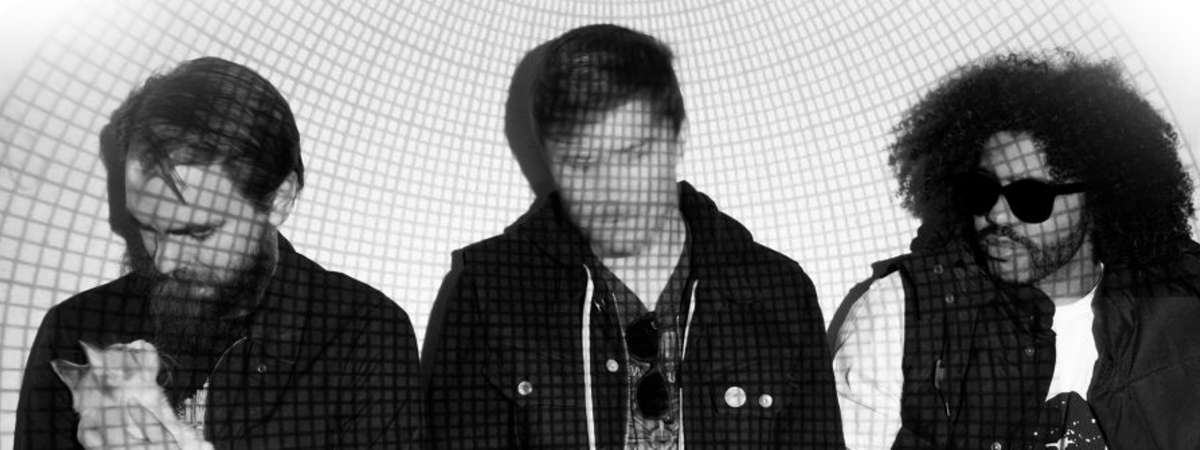
<p> The science-fiction visionary Octavia Butler once declared that “there is nothing new under the sun, but there are new suns.” The aphorism could apply to any art form where the basic contours are fixed, but the appetite for innovation remains infinite. Enter Clipping, flash fiction genre masters in a hip-hop world firmly rooted in memoir. If first person confessionals historically reign, the mid-city Los Angeles trio of rapper Daveed Diggs and producers William Hutson and Jonathan Snipes have spent the last half-decade terraforming their own patch of soil, replete with conceptual labyrinths and industrial chaos. They have conjured a mutant emanation of the future, built at odd angles atop the hallowed foundation of the past. </p> <p> Their third album for Sub Pop, There Existed an Addiction to Blood, finds them interpreting another rap splinter sect through their singular lens. This is clipping’s transmutation of horrorcore, a purposefully absurdist and creatively significant sub-genre that flourished in the mid-90s. If some of its most notable pioneers included Brotha Lynch Hung and Gravediggaz, it also encompasses seminal works from the Geto Boys, Bone Thugs-N-Harmony, and Three 6 Mafia and the near-entirety of classic Memphis cassette tape rap. </p> <p> The most subversive and experimental rap has often presented itself as an “alternative” to conventional sounds, but Clipping respectfully warp them into new constellations. There Existed an Addiction to Blood absorbs the hyper-violent horror tropes of the Murder Dog era, but re-imagines them in a new light: still darkly-tinted and somber, but in a weirder and more vivid hue. If traditional horrorcore was akin to Blacula, the hugely popular blaxploitation flick from the early 70s, Clipping’s latest is analogous to Ganja & Hess, the blood-sipping 1973 cult classic regarded as an unsung landmark of black independent cinema, whose score by Sam Waymon, the band samples on “Blood of the Fang” and inspired the album’s title. </p> <p> From the opening “Intro,” Clipping summon an unsettling eeriness. Diggs sounds like he’s rapping through a drive-thru speaker about the bottom falling out, bodies hitting the floor, and recurrent ghosts. You hear ambient noises, footsteps and shovels. The hairs on your arms stick up like bayonets. You can practically see the knife’s edge, sharp and luminous. </p> <p> Each song contains its own premise and conceptual bent. There is “Nothing Is Safe,” a reversal of Assault on Precinct 13, where the band create their own version of a John Carpenter-inspired rap beat and the cops are the ones raiding a trap house. Diggs sketches the narrative from the perspective of the victims, full of lurid and visceral details and intricate wordplay. The windows are boarded and sealed, the product simmers on the stove, the bodies sleep fitfully in shifts. Then law enforcement arrives and the bullets start to fly. </p> <p> “He Dead” turns police officers into werewolves while Diggs flips Kendrick Lamar’s “Riggamortis” into something gravely literal.“All In Your Head” finds Clipping re-contextualizing the pimp talk of Suga Free and Too $hort into a metaphor for an Exorcist-style possession. The album contains interludes featuring hissing recordings of demonic invasions and guest appearances from Griselda Gang’s Benny the Butcher and Hypnotize Minds horror queen La Chat. Other tracks feature contributions from noise music legends The Rita and Pedestrian Deposit. It all ends with “Piano Burning,” a performance of a piece written by the avant-garde composer Annea Lockwood. Yes, it is the sound of a piano burning. </p> <p> In the hands of the less imaginative or less virtuosic, it could come off as overwrought or pretentious. Instead, Clipping annex new terrain for a sub-genre often left for dead. In its own way, one could compare what they’ve accomplished to Tarantino’s post-modern reworkings of critically overlooked but creatively fertile blaxploitation, horror and spaghetti western cinema. </p> <p> Everything fits neatly into the broader scope of the band’s career, which has seen them expand from insular experimentalists into globally recognized artists. Since the release of their first album in 2013, Diggs has won a Tony and a Grammy, as well as co-written and starred in 2018’s critically hailed Blindspotting, while Snipes and Hutson have scored numerous films and television shows. </p> <p> Clipping’s last album, the 2016 afro-futurist dystopian space opus Splendor & Misery was recently named one of Pitchfork’s Best Industrial Albums of All-Time. Commissioned for an episode of “This American Life,” their 2017 single “The Deep” became the inspiration for a novel of the same name, written by Rivers Solomon and published by Saga Press. But it’s their latest masterwork that embodies what the band had been building towards — a work that finds them without peer. This is experimental hip-hop built to bang in a post-apocalyptic club bursting with radiation. It’s horror-core that soaks up past blood and replants it into a different organism, undead but dangerously alive. It is a new sun, blindingly bright and built to burn your retinas. </p>
<p>Michael Eagle grew up in chicago listening to alt-rock on q101 and taping underground rap shows on WHPK. He also occasionally snuck and ordered music videos on the Box.</p> <p>He went to college at southern illinois university and battled everybody everywhere and freestyled all the time. He graduated with a degree in psychology but somehow it never occurred to him to go to Scribble Jam.</p> <p>He moved to LA and linked up with Project Blowed. He toured with Busdriver, Aceyalone, and Abstract Rude. He started a rap group called Thirsty Fish with Dumbfoundead and Psychosiz and the Swim Team with Alpha MC, VerBS, Sahtyre and more. He worked as a teacher during this time and usually had a hangover.</p> <p>He put out his first solo album in 2010 with Mush Records. He put out his second LP with Hellfyre Club/Alpha Pup and his third with Fake Four Inc.</p> <p>He’s toured with Blu, Aesop Rock, Dessa, Homeboy Sandman, Ceschi, Moka Only, Louis Logic, and more.</p> <p>In 2012 he participated in and co-authored a study with the National Insititues of Health that had him freestyle in an MRI machine to study the brain activity that occurs during improvisational rap. Articles were published on nature.com, wired.com, discovery.com, nbc.com, npr.org and more. The articles have become infamous for the unabashed racism in each of their comment sections.</p> <p>in 2013 he was the first rapper to appear as a guest on Marc Maron’s WTF podcast. He’s also appeared on the Paul F. Tompkins show, Hannibal Burress’s comedy show, the Eric Andre live show, and the WITS show produced by American Public Media.</p> <p>He produced the first “Mike Eagle Show” in January of 2014. It was a night of rap and comedy lauded by LA Weekly ‘as something they look forward to seeing more of’. He too thought they could have written something nicer.</p> <p>His most recent work is alongside Busdriver, Nocando, milo, and more under the guise of Hellfyre Club. Their 2013 mixtape “Dorner Vs Tookie” was praised by Pitchfork, the Chicago Reader, LA Weekly and more.</p> <p>He was named Impose Magazine’s Rapper of the Year for 2013. The rapper of the whole entire year.</p> <p>His new album is Dark Comedy. Its 45 minutes of attempting to giggle at the abyss. It features raps from Hannibal Burress and Das Racist’s Kool A.D. Beats from Jeremiah Jae, Dibia$e, Busdriver and more. Its his first release on Mello Music Group.</p>
The work of Jonathan Borges and Shannon Kennedy of Pedestrian Deposit could be described as highly composed, often abstract sound textures combined to create dynamic experimental music that draws on the duo’s widely contrasting auditory obsessions. Borges’ use of crude electronics, tape loops, field recordings, and controlled feedback, contrasts against Shannon’s use of stringed instruments, bowing techniques and amplified metal and wood, resulting in music that is both raw and refined. Pedestrian Deposit bears elements of electro-acoustic sound, musique concrete, classical, and harsh noise, but cannot be confined to any one genre. Jonathan Borges began Pedestrian Deposit in the Winter of 2000, with the concept of combining layers of electronic sound with no pre-determined relation to one another until mixed. The project slowly evolved to incorporate elements of harsh noise, tape collage, field recordings and glitch music, resulting in a prolific few years of rich and dynamic compositions on such labels as Hospital Productions, Hanson Records, and Jon’s own label, Monorail Trespassing, to name a few. After a few years hiatus, Pedestrian Deposit returned in the fall of 2008 with the addition of multi-instrumentalist and visual artist Shannon Kennedy, and her elements of cello, violin and amplified, bowed and manipulated objects.
Make this yours
Sign in to save this event, RSVP, see your match score, get AI parking & arrival tips, and chat about the event.
- ⭐Personalized match score
- 💾Save & track RSVPs
- 🅿️AI parking & arrival tips
- 💬Ask anything about the event