Date & Time
Fri, Jun 19, 8:00 PM
Price
See tickets
Venue
Tannahill’s Music Hall & LoungeFort Worth, TX
122 E Exchange Ave Suite 200, Fort Worth, TX, 76164
Tickets
Price range
See tickets
This event has already taken place.
About
Doors open one hour prior to showtime. Venue box office opens one hour prior to door time. Closing hours vary per event. Bag Policy: Bags up to 12"x6"x12" are allowed in the venue. All bags will be searched prior to entry. Bags that are not clear will be subject to additional search. Mobile Tickets: Your phone is your ticket! Download your tickets into your mobile wallet and transfer to friends via www.livenation.com or the Live Nation app. Ticket Help: https://help.livenation.com/ COVID-19: The venue follows local COVID-19 guidelines, which currently are not requiring proof of vaccination/negative test for entry. Parking: Ride-share service is encouraged. Valet parking is available near the entrance to Tannahill's on Exchange Street for $20. Paid lots within short walking distance. Venue FAQ page: https://www.tannahills.com/connect/faqs Dining by Chef Tim Love: https://www.tannahills.com/food-drink
About the venue
Performing
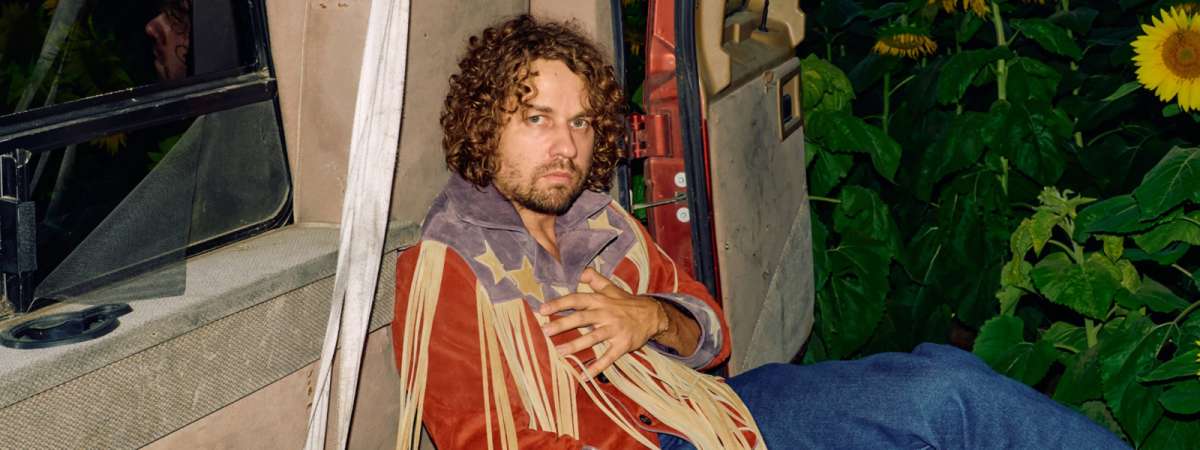
Throughout his four solo albums and myriad records of various collaboration, Kevin Morby has recognized in his work the ubiquity of an apparent religious theme. Though not identifying as “religious” in the slightest, Morby—the globetrotting son of Kansas City who has made music while living on both coasts before recently returning to his Midwestern stomping grounds—recognizes in himself a somewhat spiritual being with a secular attitude towards the soulful. And so, in an effort to tackle that notion head-on and once-and-for-all, he sat down in his form of church—on planes and in beds—and wrote what would become his first true concept-album: the lavish, resplendent, career-best double LP Oh My God. “Religion is around all of us,” Morby says. “It’s a universal language and there is profound beauty in it. I’ve found it a useful tool within songwriting, as it’s something everyone can relate to on some level. There are religious themes or imagery in a lot of what I’ve done, so I wanted to get all of that out and speak only that language for a whole record. It’s not a born-again thing; it’s more that ‘oh my god’ is such a profound statement we all use multiple times a day and means so many different things. It’s not about an actual god but a perceived one, and it’s an outsider’s view of the human experience in terms of religion.” Morby admits he has viewed the world through a skewed spiritual lens his entire life. As a kid he was told by his working-class parents that he was a Methodist, though the family rarely if ever made good on that claim come Sunday; he saw fire-and-brimstone billboards on Kansas roadways with the aim of scaring heathens straight. Despite his ignorance and indifference, religion seemed to be everywhere, and as Morby grew as a musician—playing bass for Woods, fronting The Babies, and with his solo career—he embraced its influence with his work. In 2016, on the heels of a trio of critically-acclaimed albums, he wrote the protest song “Beautiful Strangers” about the devastating world events of that year, and in it he inserted multiple “oh my god”s as pleas of desperation. The song took off and the phrase became a mantra for Morby, inspiring him to weave the exclamation conceptually into the fabric of an entire album. In effect, he sought to highlight how that immortal turn of phrase embodies so much of our relationship with the sacred and profane—how religion is all around us, always, and that by simply uttering an OMG we enforce its ubiquity and ability to endure while humanizing its reach. In January 2017, preceding the release of his fourth solo record City Music, Morby went into producer Sam Cohen’s Brooklyn studio for four days to record a handful of material written with his usual folk-meets-lo-fi-electric-guitar sound in mind. Cohen, with whom Morby made his 2016 breakthrough Singing Saw, had started recording the new songs with a business-as-usual mentality when on the third day he was struck with an idea: Rather than create what was becoming Singing Saw: Part 2, what if they stripped everything back and used only a few colors at a time instead of the entire Morby rock palette, focusing on Morby as hyper-literate singer instead of guitar-slinging troubadour? “Sam suggested that we make songs that sound like sonic pop-art that only have a few colors, like a Keith Haring piece,” Morby says. “My other records had tons of colors, so we decided to keep this stark, like a painting that’s black-and-white with one vibrant blue. We went back to the drawing board and thought about what we wanted to do conceptually across an entire piece. And for the first time I could do exactly what I wanted, as I had time and the ability to get everything precise. Sam encouraged me to let my lyrics sit on top of everything else, and that discovery and the confidence that came with making my fifth record helped me realize the new direction was exactly where we needed to be. We opened it up completely and set out to make something in its own universe.” Over the remaining day-and-a-half, Morby and Cohen recorded new versions of four songs—“Oh My God,” “No Halo,” “Savannah,” and “Nothing Sacred/All Things Wild,” the latter becoming a mission statement for the new sound and featuring Morby singing, Cohen playing a subtle organ part, and Morby’s drummer Nick Kinsey on congas. Breaking the songs down into their separate parts served Morby’s religious theme perfectly, as did the blueprint of “Beautiful Strangers,” and over the course of 2017 he wrote an album’s worth of similar songs while on tour. As Morby jetted around the world playing shows, he came to realize that all that air travel was making its way into his music, too. He had always used his time in the sky to work on songs and listen to demos he had recorded, but he began noticing an aero-dynamic emerging in his lyrics as well. “Flying can be something of a religious experience for many people, myself included,” he says. “It’s unnatural, and it can be so scary being that high up—a few big bumps can even make an atheist pray. You’re anxious as you take off and thinking about death, then you level off and suddenly you’re in this kingdom above the clouds. There’s a holy feeling, and a big part of the record’s theme is being above the weather. The first song, ‘Oh My God,’ starts with chaotic hammering on a piano and then smooths out with a choir singing; it’s meant to mimic how I feel on an airplane.” All that flying also meant Morby was sleeping in a new place each night, a situation he also learned to embrace creatively—most of Oh My God’s songs were written from beds. Morby typically starts and ends each day by playing guitar or writing songs while under the covers, a practice that mimics prayer in myriad ways. “There’s something sacred about working from bed,” he says. “It’s where you make love and where you dream. I always write just before I go to sleep and right when I wake up. It’s where I can access that feeling of dreams. Any bed is always a sanctuary, but my bed at home is the Holy Grail.” Morby sought to represent these sentiments visually for the release of Oh My God. In addition to using a portrait of him reclining in his own fluffy-white bed at home in Kansas City on the album cover, he also worked with the filmmaker Chris Good on a short film to accompany the release. The film stars Morby as he wanders through a dream-like series of encounters—on planes, in cars, in a diner, at home in his back yard—and presents a Gondry-esque vision of the album and its holy mood.
Liam Kazar makes joyful rock songs so irresistible they feel timeless. Just ask Jeff Tweedy. “I love everything about Liam. His voice, his songs, the way he plays instruments, his smile, his cooking... Everything,” says Tweedy. ”Whenever I hear one of his songs for the first time I almost immediately start thinking to myself, ‘oh yeah! This song! I love this song.’ It’s a magic trick very few people can pull off: making something brand new sound like a cherished memory.” But on Kazar’s debut album Due North, out August 6 via Mare Records, the LP’s 10 tracks are full of so much charm, wit, and heart it can’t be a sleight of hand. <br><br> The Kansas City-based, Chicago-raised musician and acclaimed chef/founder of the Armenian pop-up restaurant Isfahan, describes the making of Due North as a personal revelation, where the more he wrote the more his songs showed what kind of artist he’s always wanted to be. While he’s consistently been a dream bandmate over the past several years, performing with artists like Tweedy, Steve Gunn, Daniel Johnston, and more, making his own songs presented a chance to finally find his own voice. But figuring out how to step out was a rewarding challenge. “This record kind of all stemmed from a conversation I had with Jeff,” says Kazar. “I showed him some of my earliest songs I was working on and he told me, ‘It sounds like you're writing for the people in your bands, you're not writing for yourself.’ He was completely right. I was not writing songs for myself.” With that needed insight, Kazar decided to start from scratch and write songs that felt like himself. <br><br> Single “Shoes Too Tight” was a clarifying moment for Kazar in this journey. Originally a slower acoustic ballad, Kazar slowly tinkered with a synth sound and happened upon the song’s bouncy chord progression. “That was probably the closest to an aha moment that I had of ‘Oh, this is me and this is what I'm into,’” says Kazar. The finished product is an undeniable jam with a swaggering exuberance that channels Richard Swift and David Bryne. Soon after, Kazar switched gears for the yearning and delicate “On a Spanish Dune” which showcased his emotional resonance as a writer. With lush synths and wistful acoustic guitars, he sings, “Everybody's asking me / What you gonna do, gonna be / I couldn't tell you if I tried / I'm just a poem with an open line.” Though completely different songs, Kazar used these two earliest offerings as guides for what would come next. “ Those two songs were my North Star that I was following for this album,” says Kazar. “This is what it sounds like when I write for me.” <br><br> “There were two words I had in my head during the making of this record, which was joyful and vulnerable,” says Kazar, citing Al Green’s 1978 The Belle Album as an LP that encapsulates such a feeling. “I was trying to talk about things that I'm scared about but acknowledging that I'm not that powerful and you can still be joyful in the face of your own insecurities.” Take album highlight “Frank Bacon,” where Kazar sings, “When you’re running uphill and swimming upstream / Nothing’s ever gonna be the way it seems.” Despite any lyrical uncertainty the track is bursting with life, especially in the monster groove from drummer Spencer Tweedy and bassist Lane Beckstrom. Elsewhere on “Nothing To You,” Kazar finds the sweet spot between indie rock jangle and subtle country twang as he sings, “I hope you don’t resent / The love between your hands.” <br><br> Along with Tweedy and Beckstrom, Kazar enlists keyboardist Dave Curtin (Woongi), co-producer James Elkington on pedal steel, as well as Ohmme and Andrew Sa on backing vocals. Opener “So Long Tomorrow” showcases the band’s chemistry, a winding jam full of playful and soulful instrumental flourishes. One of the last songs written for the album, it was recorded remotely in quarantine but despite the distance the band’s tight bond is obvious. “These songs totally blew me away the first time I heard them: they sound like David Bowie meets the Band,” says Mare Records co-founder Kevin Morby. Due North was mixed by Sam Evian at his Flying Cloud Recordings Studio in upstate New York. “Sam knew exactly what I'm trying to do with this record,” says Kazar. “He put the whole track listing together and really had a vision for the record that I needed at that time.” <br><br> Like most musicians, the pandemic threw Kazar for a loop, knocking out both his touring revenue and his part-time gigs as a bartender. With more than enough time in his Kansas City home, he decided to pursue his longtime love of cooking by creating the restaurant, Isfahan. With recipes that honor his Armenian heritage and his family’s journey to the United States from Iran, Syria, and Lebanon, Kazar’s cooking has received press from Time Out Chicago and Eater. “In COVID, my mantra was to not have my heart broken about the future and be present,” says Kazar, explaining that ethos is one of the reasons why he named the LP Due North. <br><br> Though Due North is full of songs that act as a mirror to Kazar’s many talents, few sum it up as concisely as “No Time For Eternity.” On the track, he and Chicago country crooner Andrew Sa sing over wailing pedal steel, taking stock of the most important things in life: “Making time to live my life / Making time for you and me.” “The reality of my life is that when I come home, and I'm talking with my partner, maybe we had a bad day, but we still are laughing and having a good time with each other at the same time,” says Kazar. “I had to make music that expressed that part of me that’s a person who genuinely enjoys themselves.”
About
Doors open one hour prior to showtime. Venue box office opens one hour prior to door time. Closing hours vary per event. Bag Policy: Bags up to 12"x6"x12" are allowed in the venue. All bags will be searched prior to entry. Bags that are not clear will be subject to additional search. Mobile Tickets: Your phone is your ticket! Download your tickets into your mobile wallet and transfer to friends via www.livenation.com or the Live Nation app. Ticket Help: https://help.livenation.com/ COVID-19: The venue follows local COVID-19 guidelines, which currently are not requiring proof of vaccination/negative test for entry. Parking: Ride-share service is encouraged. Valet parking is available near the entrance to Tannahill's on Exchange Street for $20
Make this yours
Sign in to save this event, RSVP, see your match score, get AI parking & arrival tips, and chat about the event.
- ⭐Personalized match score
- 💾Save & track RSVPs
- 🅿️AI parking & arrival tips
- 💬Ask anything about the event