Date & Time
Thu, May 14, 8:00 PM
Price
See tickets
Tickets
Price range
See tickets
This event has already taken place.
About
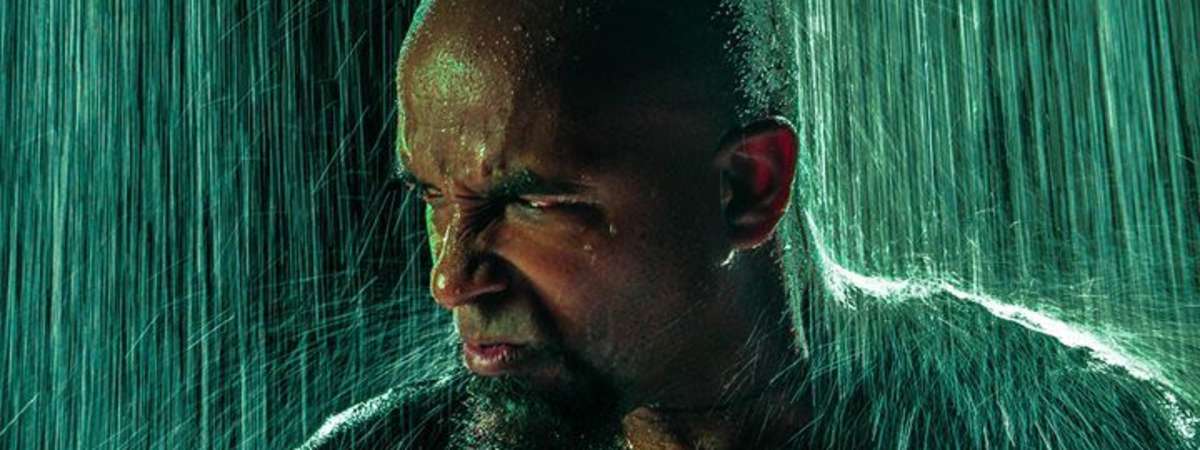
Out of the Midwest, Tech N9ne broke all of the rules, subverted expectations, dumbfounded the system, and set a precedent for hip-hop and independent music often imitated (but never duplicated) by generations to follow. At the helm of his own Strange Music proudly based in Kansas City, MO since 2000, he has personally notched four platinum singles, eleven gold singles, and two gold albums. As a whole, the Strange Music catalog also houses 23 RIAA gold and platinum records. The company’s Kansas City headquarters consists of six buildings: Strange Music (label offices), Strangeland (recording studios, soundstage), Strange World (merchandise manufacturing plant), Strange Box (vehicles), Strange Carwash, and Strange Works (construction company). Representing the underground, Tech is practically “a regular” on the Forbes “Cash Kings” list. Beyond gracing the cover of XXL and the stage of ABC’s Jimmy Kimmel Live!, he wound up on the playlist of none other than Sir Elton John and performing to 1 million-plus at the parade for the Kansas City Chiefs’ Super Bowl victory. He’s the only artist (on this planet) who has collaborated with Eminem, Tupac, Lil Wayne, and Kendrick Lamar as well as The Doors, Slipknot, System of a Down, Deftones, Jelly Roll, and MGK. He holds down the record for “most Top 10 albums on the Billboard Rap Chart” and staked a spot in the Top 5 of the Billboard 200 four times. On top of a thriving self-sufficient merchandising empire, he notably joined forces with Kansas City’s own Boulevard Brewery for his craft beer Bou Lou. After three decades in the game, the rapper landed “the biggest hit of his career” with 2021’s “Face Off” featuring Joey Cool, King Iso, and none other than megastar Dwayne “The Rock” Johnson. In unprecedented fashion, he ignited TikTok, generated a quarter-of-a-billion streams, and incited a frenzy from Variety, People, TMZ, NY Post, Today, and Entertainment Weekly. Tech N9ne continued his journey in 2023 with the acclaimed BLISS and more to come. KNOW BEFORE YOU BUY - Bag Policy: VIEW HERE - Age Policy: 16 and Under with Parent or Legal Guardian - General Admission is Standing Room Only - NO SEATS - Set/Start Times are Subject to Change - Orders in Violation of the Published Ticket Limit are Subject to Cancellation Without Notice - Tickets will be sent via the AXS Mobile ID App. Please download before arrival. - No Covid Protocols For This Event - Venue FAQs & Policies: View Here - No Refunds or Exchanges
About the venue
Performing
Some artists get writers block, but for Tech N9ne, the ideas keep flowing. <br><br> That’s why, more than a decade after he released his first nationally-distributed album, the pioneering Kansas City rapper decided to call his forthcoming studio album Something Else. “After all this music, you have the nerve to say to the world that you have something else other than what we’ve heard already, that’s cocky,” Tech N9ne says. “I knew going into this album that it was going to have to be totally something else beatwise, contentwise and featurewise. I went in on a lot of stuff.” <br><br> Tech N9ne delivers on his goals throughout Something Else, a rousing collection that takes listeners on an epic journey through Fire, Water and Earth sections of the album, a formatting tactic Tech N9ne also employed on his landmark Anghellic album in 2001 and his Everready [The Religion] album in 2006. “Straight Out The Gate” kicks off the intense Fire section of the album. Featuring System Of A Down’s Serj Tankian, the song has political and religious overtones while highlighting both Tankian and Tech N9ne’s talents. “Serj, he’s a guy that takes chances with music and sounds and fuses them together and that’s how I feel about my hip-hop music,” Tech N9ne says. “Our being on a song together, that’s one of the biggest things that could happen. That’s why I put it first on the album.” <br><br> From there, Tech keeps the intensity level sky-high with “B.I.T.C.H.,” an acronym for “Breaking Into Colored Houses,” a cut about his interaction with his black fans. “Love 2 Dislike Me” discusses the aftermath of a relationship gone sour, while “Fortune Force Field” explains how certain people are trying to keep Tech N9ne from enjoying all the fruits of his musical labor. Then there’s “I’m Not A Saint,” Tech N9ne’s latest look at his Evil Brain Angel Heart persona. <br><br> Tech N9ne embraces such personal, evocative subject matter because it is an innate part of his artistry. “The reason I opened up on this album is because throughout my career, all I’ve been doing is being inside out, being an open book,” he says. “Since the album is called Something Else, I have to let certain things loose that I otherwise wouldn’t let loose.” <br><br> The same logic applies to “Fragile,” a fierce collaboration with Kendrick Lamar, ¡Mayday! and Kendall Morgan. Here, the artists blast uninformed critics who lack the perspective and qualifications to fully and accurately evaluate their craft. Tech N9ne also introduces spirited newcomer Angel Davanport on “Priorities,” which also features Game. <br><br> As the Water section of the album arrives, the selections become calmer, if only thematically. “Dwamn” introduces the album’s first party vibe, while “So Dope (They Wanna)” with Wrekonize, Snow Tha Product and Twisted Insane, is the latest of Tech N9ne’s posse cuts highlighting rappers who excel at rapid-fire rapping, or chopping. “See Me,” with Wiz Khalifa and B.o.B., showcases Tech N9ne’s ability as an independent artist to conceive and execute independent albums with major label artists and with a major label feel. That’s also why this song’s lyrics focus on people overlooking Tech N9ne’s remarkable achievements – that he’s sold more than 2 million units independently, developed into to one of music’s most dependable touring artists and that he’s built Strange Music into one of rap’s most successful imprints from his hometown of Kansas City. <br><br> As Something Else advances to the Earth section, Tech N9ne focuses on topics he hopes will make the world better. “That’s My Kid,” with CeeLo Green, Big K.R.I.T. and Kutt Calhoun, for instance, finds Tech N9ne contemplating the recent rash of school shootings and realizing how fortunate he is that his children did not make some of the mistakes that he did as a child. “I was just sitting up one day looking at all these kids that do these heinous things, these horrible things,” Tech N9ne says. “I’m lucky that my son didn’t latch on to the Blood gang nonsense that I grew up doing. He latched on to music and now he wants to rap. I’m blessed. I have to rejoice.” <br><br> Tech N9ne also rejoiced on the career-defining song “Strange 2013,” his collaboration with The Doors. Tech N9ne named his Strange Music label with partner Travis O’Guin after the icon rock group’s songs “Strange Days” and “People Are Strange.” As a black fan of rock and rap growing up in Missouri, Tech N9ne grew up thinking he was “strange”. Getting to work with the surviving members of The Doors on “Strange 2013,” a reworking of “Strange Days,” is one of the proudest moments of his groundbreaking career. <br><br> “If it wasn’t for their fusion of music, I would have never told Travis I wanted to call the joint venture that we have Strange Music,” Tech N9ne explains. “That’s why ‘Strange 2013’ meant so much to me. Now, when I listen to it, I smile, like, ‘I did that.’ They’re the ones that inspired me. It’s the thing keeping me alive and putting my kids through college, because I was a Doors fan.” <br><br> Today, millions of people are Tech N9ne fans. He became known as an innovative rapper in the 1990s because of his trendsetting ability to rap at breakneck speed, to rap backwards and, soon thereafter, to also deliver riveting personal songs that examined his own inner demons, as evidenced throughout such memorable cuts as “Tormented” and “Real Killer.” In the 2000s, Tech N9ne hit the road relentlessly, becoming one of rap’s premier touring acts. <br><br> With 2012’s “Hostile Takeover 2012 Tour,” Tech N9ne holds the title of headlining the longest continuous tour in rap history. Even with all these accolades and the impressive list of artists Tech N9ne features on Something Else, he sounds as fresh and hungry as he did when he first started releasing music commercially more than a decade ago. “I’ve got a chip on my shoulder,” Tech N9ne says. “I’ve still got a lot to prove. That’s why I still rap so hard. I’m always trying to get better and better. I’m not softening it.” <br><br> That, in and of itself, is Something Else indeed.
Synonymous with Bay Area rap, E-40 garnered a regional following, and eventually a national one, with his flamboyant raps, while his entrepreneurial spirit, embodied by his homegrown record label, Sick Wid' It Records, did much to cultivate a flourishing rap scene to the east of San Francisco Bay, in communities such as Oakland and his native Vallejo. Along with Too Short, Spice 1, and Ant Banks, E-40 was among the first Bay Area rappers to sign to a major label, penning a deal with Jive Records in 1994. They'd spent years releasing music independently, going back as far as 1990 when Sick wid' It released Let's Side, a four-track EP by the Click, a group comprised of E-40, his cousin B-Legit, his brother D-Shot, and his sister Suga T. <br><br> Throughout the '90s and into the early 2000s, E-40 and his Sick wid' It associates released a series of albums on Jive, and though they weren't big sellers nationally, they were well received regionally and proved highly influential, not only on the West Coast but also in the South, thanks in part to Master P, who began his No Limit Records empire in the Bay Area (i.e., Richmond) in the early to mid-'90s before relocating to New Orleans. E-40's ties to the South became more direct in the mid-2000s, when, upon the expiration of his deal with Jive, he partnered with Atlanta rapper/producer Lil Jon and his BME Recordings label, in association with Warner Bros. The first album to be released as part of this partnership, My Ghetto Report Card (2006), was E-40's most successful in years. Concurrently, the Bay Area rap scene, with its so-called hyphy style, was growing in popularity nationally, and there was no bigger champion of the Bay and its style than E-40, whose innumerable guest features helped foster the scene and whose son, producer Droop-E, had grown to become one of hyphy's foremost practitioners. <br><br> Born Earl Stevens on November 15, 1967, in Vallejo, California, E-40 made his rap debut in 1990 on Let's Side, the aforementioned four-track EP by the Click. The EP was co-produced by Mike Mosley and Al Eaton. In 1993 E-40 made his solo album debut, Federal, a nine-track LP/14-track CD produced by Studio Ton and released by Sick Wid' It in association with SMG (Solar Music Group), a regional distributor. Then in 1994, on the strength of the regionally popular independently released single "Captain Save a Hoe" (aka "Captain Save 'Em Thoe") from the six-track Mail Man EP, E-40 signed a recording contract with Jive Records, the home of Bay Area pioneer Too Short since 1987. Jive re-released "Captain Save a Hoe" on 12" and also re-released the Mail Man EP, adding two bonus tracks; all the songs on the EP, including "Captain Save a Hoe," were produced by Studio Ton, except one of the bonus tracks, "Ballin' Out of Control," which was produced by Mike Mosleyand Sam Bostic. In 1995 Jive released four E-40albums: a re-release of Down and Dirty, a 1994 album by the Click; Game Related, a newly recorded album by the Click; a reconfigured version of Federal, his 1993 solo debut; and In a Major Way, a newly recorded album produced by Studio Ton, Mike Mosley/Sam Bostic, and Funk Daddy. Of these numerous releases, In a Major Way proved E-40's breakthrough; featuring a collaboration with fellow Bay Area hardcore rappers 2Pac, Mac Mall, and Spice 1, "Dusted 'n' Disgusted," in addition to several songs that would also become fan favorites ("Da Bumble," "Sideways," "Sprinkle Me," "1-Luv"), the album was very well received regionally and took the rapper's career to a new level of respectability. <br><br> Beginning with Tha Hall of Game (1996), E-40 released six additional solo albums on Jive -- The Element of Surprise (1998), Charlie Hustle: The Blueprint of a Self-Made Millionaire(1999), Loyalty and Betrayal (2000), Grit & Grind(2002), Breakin News (2003) -- plus one further album by the Click, Money & Muscle (2001). Over the course of these albums, E-40 maintained his regional following and picked up additional fans nationally, yet he never did break into the mainstream. Besides "Captain Save a Hoe," only two of his Jive singles ever charted on the Billboard Hot 100 ("1-Luv," 1995; "Things'll Never Change," 1996), and following his initial burst of popularity from 1994 to 1996, his sales generally declined from one album to the next. E-40's career isn't well measured by chart hits and album sales, though, for he more or less remained an underground rapper, albeit one with a major-label contract, working almost exclusively with an inner circle of Bay Area rappers and producers. His long list of guest features is representative of his popularity (not to mention his generosity), as practically every regional act sought his presence. A guest feature by E-40 gave an unknown West Coast rapper instant credibility, even if it didn't amount to a national hit. During the late '90s, E-40 also began being featured as a guest on Southern rap albums (for example, appearing on 8ball's Lost, Master P's MP Da Last Don, and Scarface's My Homies in 1998 alone). <br><br> E-40's ties to the South became most clear in 2006, after the expiration of his contract with Jive, when he partnered with Lil Jon and his BME Recordings label for My Ghetto Report Card, released in association with Warner Bros. The album -- featuring production from Lil Jon as well as Bay Area beatmakers Droop-E, Rick Rock, Studio Ton, and Bosko -- was E-40's most successful in years, arguably since Tha Hall of Game (1996) or even In a Major Way (1995), and it marked his return to the Billboard Hot 100 for the first time in a decade, with a pair of impressively charting singles: "Tell Me When to Go," featuring Keak da Sneak (number 35), and "U and Dat," featuring T-Pain (number 13). His 2008 effort The Ball Street Journal featured the Lil Jon production “Break Ya Ankles" as its lead single, followed by the Akon feature “Wake It Up.” Two years later he returned with the ambitious Revenue Retrievin' project, a double album split into two separate releases. The Day Shift version featured the more street-oriented cuts while the Night Shift version was filled with club tracks. The project turned into a quadrilogy in 2011 with the simultaneous release of his 13th (the varied Revenue Retrievin': Overtime Shift) and 14th (the very dark Revenue Retrievin': Graveyard Shift) albums. A year later he would return with another batch of releases, this time divided in three single discs titled The Block Brochure: Welcome to the Soil, Pt. 1, 2, and 3.
Artist/Producer
About
Out of the Midwest, Tech N9ne broke all of the rules, subverted expectations, dumbfounded the system, and set a precedent for hip-hop and independent music often imitated (but never duplicated) by generations to follow. At the helm of his own Strange Music proudly based in Kansas City, MO since 2000, he has personally notched four platinum singles, eleven gold singles, and two gold albums. As a whole, the Strange Music catalog also houses 23 RIAA gold and platinum records. The company’s Kansas City headquarters consists of six buildings: Strange Music (label offices), Strangeland (recording studios, soundstage), Strange World (merchandise manufacturing plant), Strange Box (vehicles), Strange Carwash, and Strange Works (construction company).
Make this yours
Sign in to save this event, RSVP, see your match score, get AI parking & arrival tips, and chat about the event.
- ⭐Personalized match score
- 💾Save & track RSVPs
- 🅿️AI parking & arrival tips
- 💬Ask anything about the event